Product familyModules & Sensors, Sensors, Health Sensors
Stock signalCurrently out of stock
Order typeDirect product order
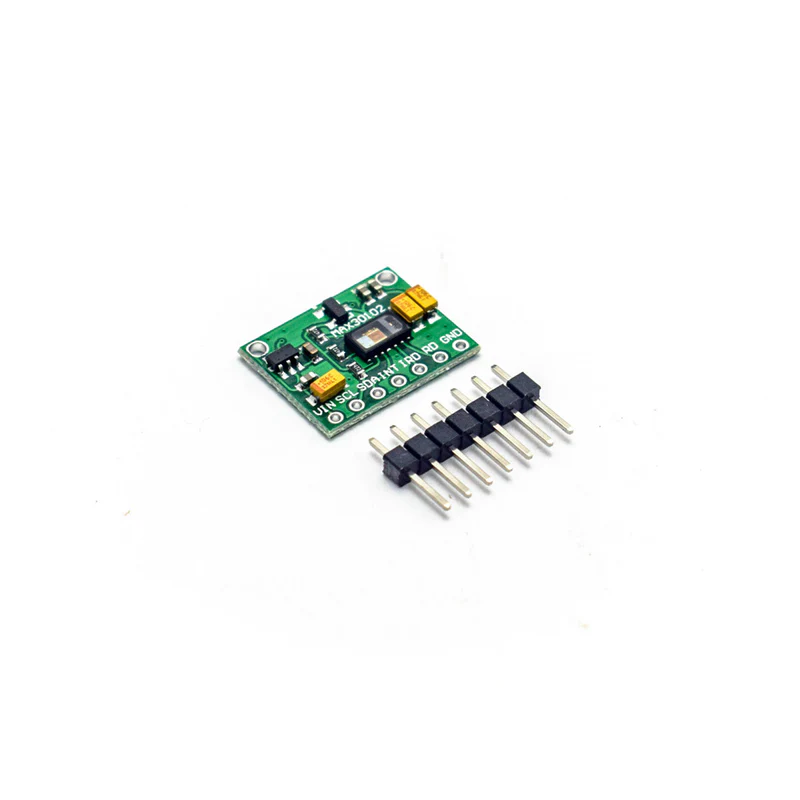
The MAX30102 is an integrated pulse oximeter and heart rate monitor Sensor. It integrates a red LED and an infrared LED, photo electric detectors, optical devices and low-noise electronic circuits with ambient light suppression. The MAX30102 features a 1.8V supply and a separate 5.0V for internal LED power supply for wearable devices for heart rate and blood oxygen collection detection. Standard I2C compatible communication interface can transfer the collected values to the Arduino, KL25Z and other microcontrollers for heart rate and blood oxygen calculation. The module can be shut down through software with zero standby current, allowing the power rails to remain powered at all times.
Photodissolution method:
The measurement of pulse and blood oxygen saturation is performed by using human tissue to cause different light transmittance when the blood vessel beats.
Light source: A specific wavelength of light-emitting diode selective for oxyhemoglobin (HbO2) and hemoglobin (Hb) in arterial blood.
Light transmittance is converted into an electrical signal:
The change in the volume of the arterial pulsation causes the light transmittance of the light to change. At this time the light reflected by the human tissue is received by the photoelectric transducer, converted into an electrical signal and amplified and output.
Note: This sensor works on 3.3V Devices directly. You can connect it to 3.3V devices like ESP8266, ESP32, etc directly. To use it with the Arduino UNO, Mega, Nano, etc use a level shifter in between. Else the I2C connection will not work.

 Thermal Sensor Relay Module
 IR Proximity Sensor Module
 Pulse Rate sensor
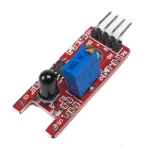 Flame sensor Module